
VT-APS
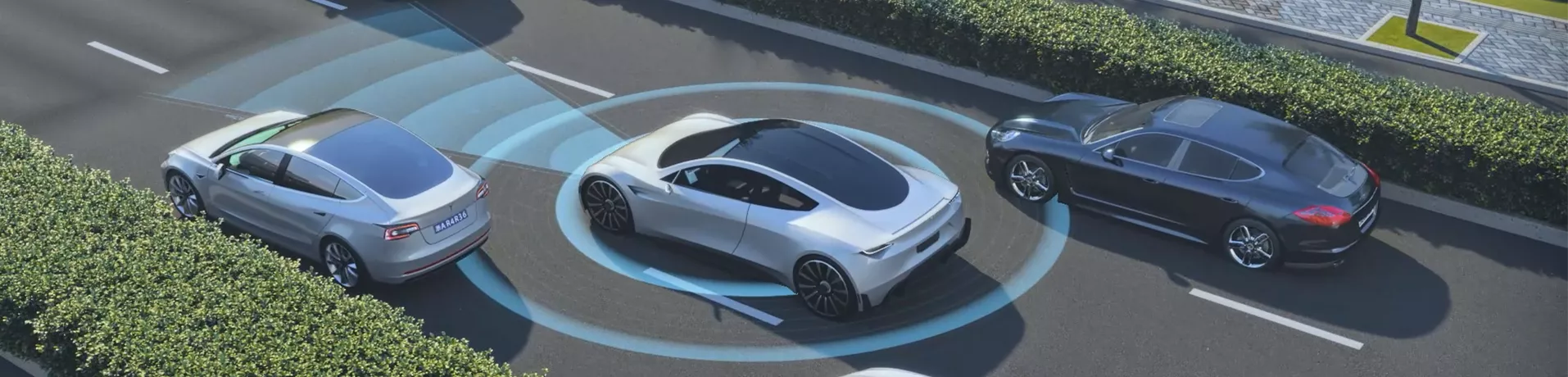
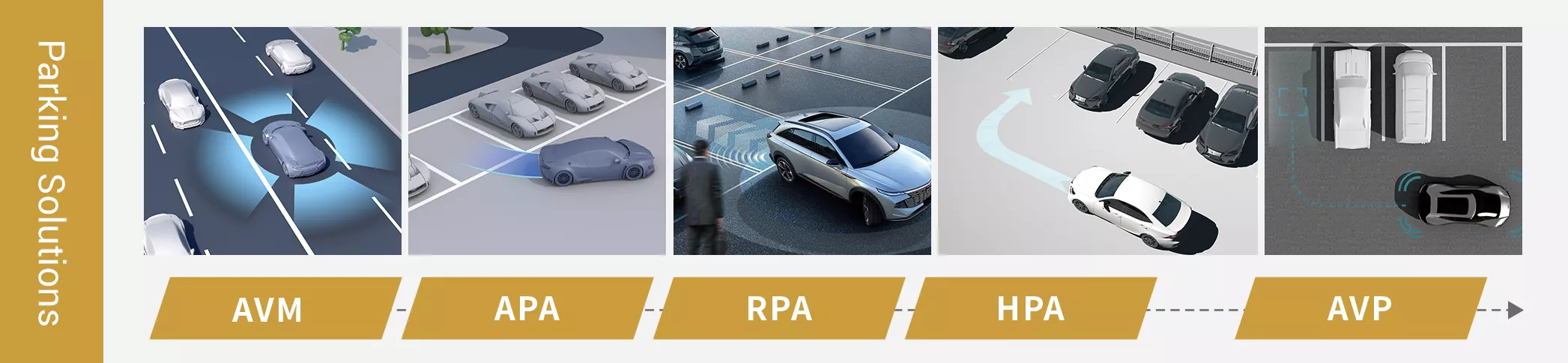
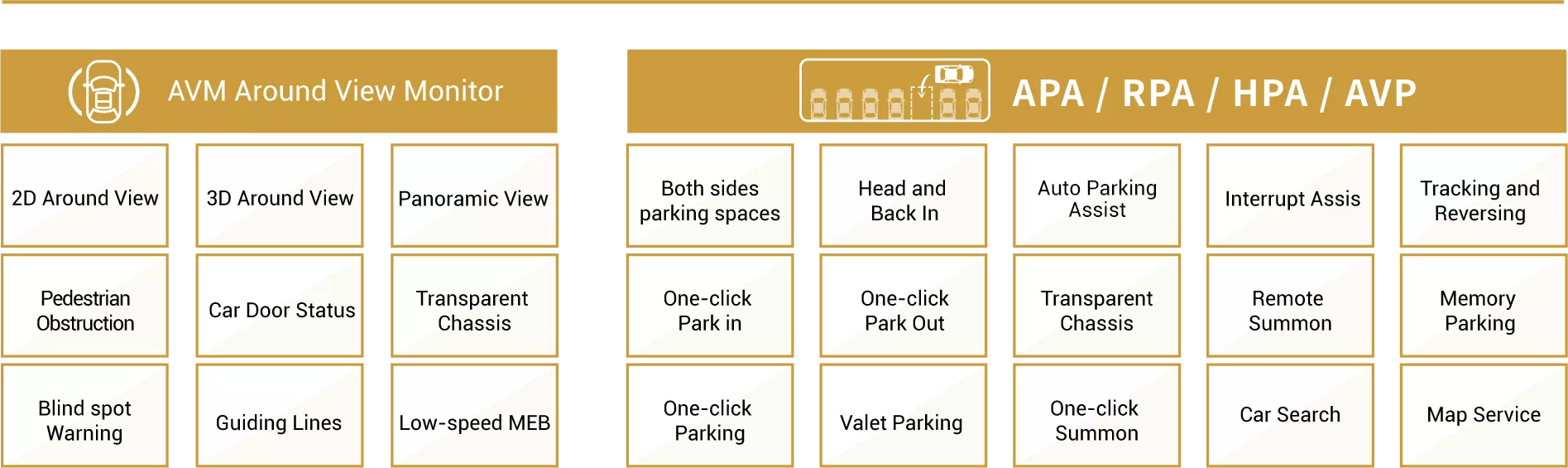
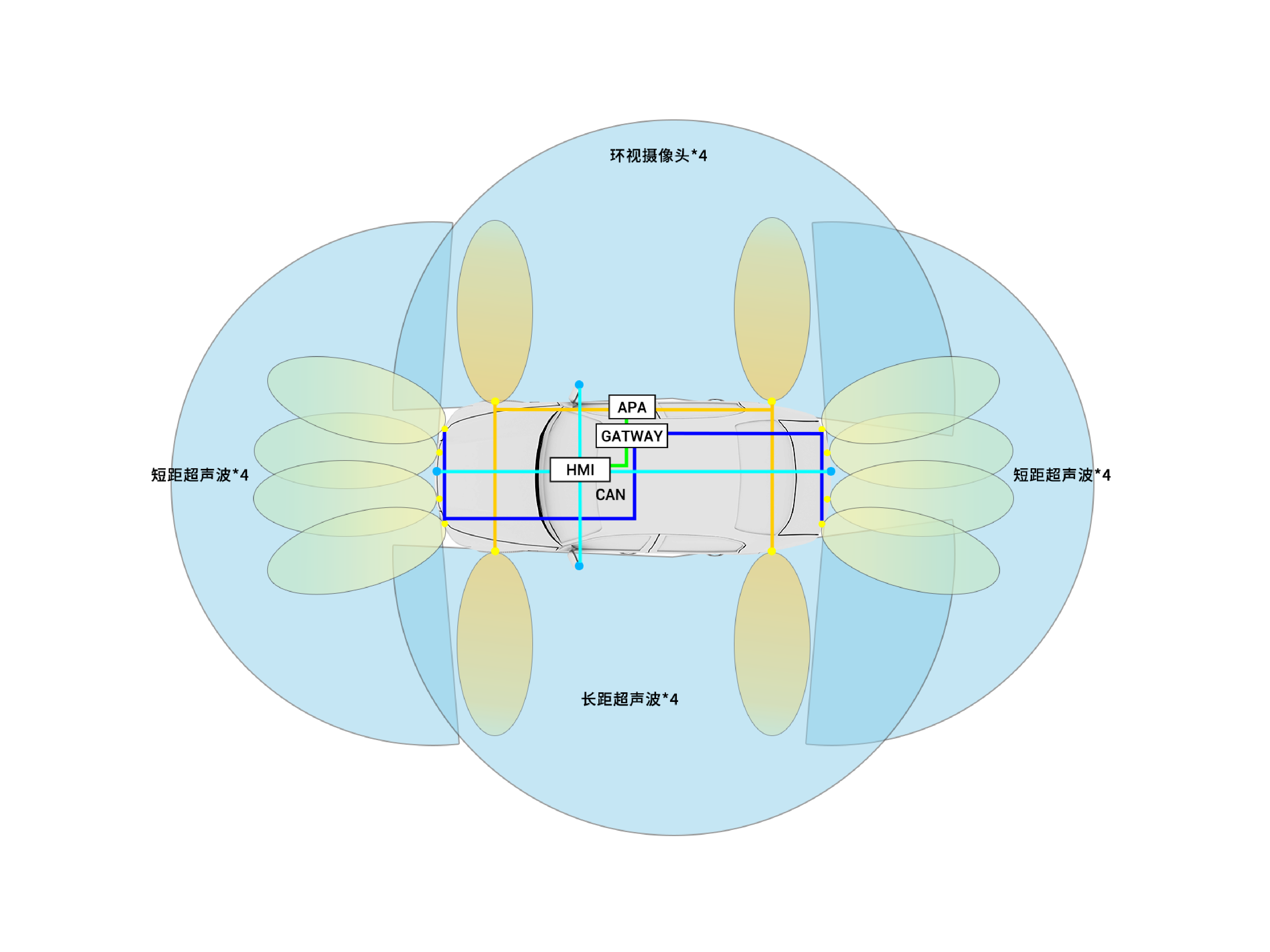
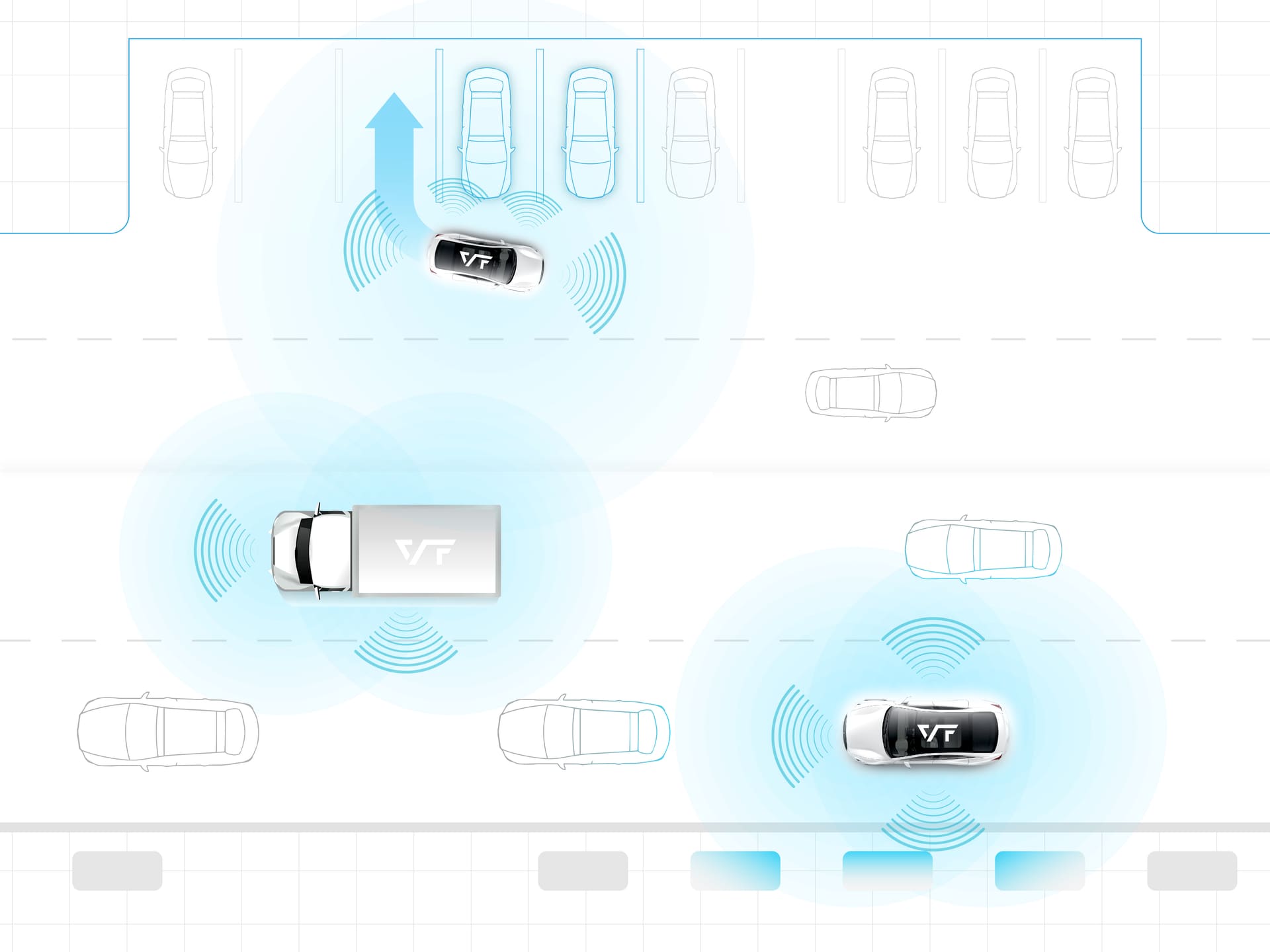
VT-APS (Automatic Assisted Parking System) features autonomous assisted parking / remote assisted parking / home assisted parking at low speed scenarios. Based on fusion of ultrasonic radar, camera, millimeter wave radar, inertial navigation and other sensors, data are processed through Voyager ISL developed deep learning algorithm, the system can independently learn, optimize and provide safe operation.
VT-APS Functions
VT-APS Advantages
Visual Perception
VT-APS utilizes a self-developed multi-task neural network algorithm, which can minimize computing power requirements to as low as 0.5T. It achieves an average recognition rate of 95% with a perception accuracy of approximately 10cm, enhancing the final parking success rate of APA.
The system can recognize both perpendicular, parallel, and diagonal parking spaces. Obstacles such as ground locks, pedestrians, vehicles, bicycles, motorcycles, traffic cones, and parking stops can be identified, and it is adaptable to various weather and lighting conditions.
Control Algorithm
The low-level control algorithm is based on the vehicle dynamics model, employing a tangent circle planning algorithm to discretize path information. During the parking process, it can dynamically adjust vehicle speed and steering wheel angle, achieving smoother reversing path, more accurate target, and improving user comfort.
The high-level control algorithm is optimized using a hybrid A* algorithm, reducing the average number of maneuvers to less than 3 times. This makes the parking more human-like, significantly enhancing the user experience. When combined with high-precision visual perception, it performs well in narrow parking spaces, small parking areas, and dead-end roads.